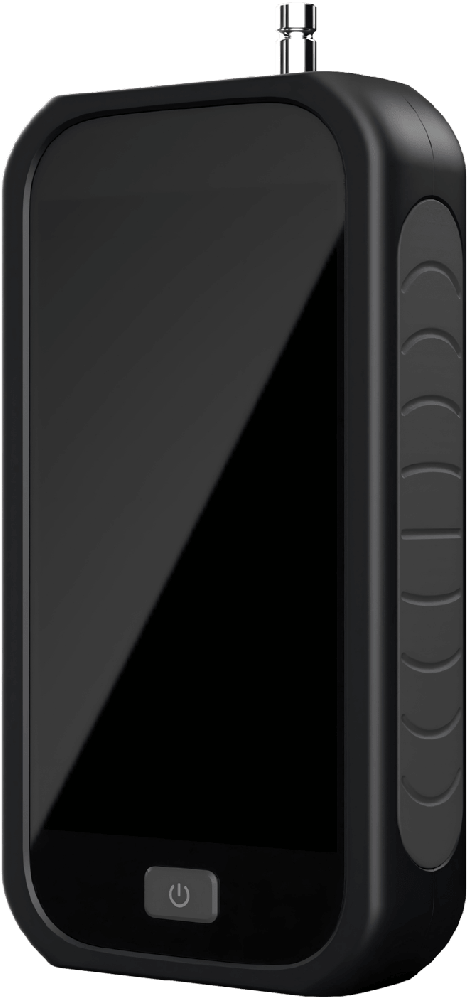
Handheld Raman Spectrometer
- Product Number:SR1-785
- Product Difference:Spectral range: 200–3,800 cm⁻¹, designed specifically for fast, non-destructive, and highly sensitive material analysis
 +86 19353291814
 Online Consultation
Product Introduction
The handheld Raman spectrometer is a portable, miniature confocal Raman spectroscopy device. Based on the principle of Raman scattering, it uses a laser to excite molecular vibrational and rotational energy level transitions in a sample to obtain characteristic spectral information, enabling rapid identification of material composition. It is specifically designed for fast, non-destructive, and highly sensitive material analysis.
Suitable for rapid on-site testing, it is widely used in multiple fields and industries, including pharmaceuticals, public safety, chemical testing, food safety, jewelry testing, and industrial materials analysis.
Certification Standards
1. Passed CQC Explosion-Proof Certification
Complies with: GB/T 3836.1-2021 “Explosive Atmospheres—Part 1: Equipment—General Requirements,” GB/T 3836.4-2021 “Explosive Atmospheres—Part 4: Equipment Protected by Intrinsic Safety ‘i’,” and GB/T 3836.22-2023 “Explosive Atmospheres—Part 22: Protective Measures for Optical Radiation Equipment and Transmission Systems”
2. Calibration Specification: JJF 1544-2024 “Calibration Specification for Raman Spectrometers”
Product Features
Cloud Architecture: Equipped with cloud services, detection data can be uploaded wirelessly to enable long- and short-term dynamic analysis and management; instrument data models can be updated via the cloud; supports cloud-based data retrieval and recognition; the platform can be deployed on-premises, and the platform’s existing database is provided.
Fluorescence Suppression: This device utilizes 785 nm laser excitation, combined with a high-sensitivity detector and an optimized optical system (confocal), to reduce interference from highly fluorescent samples and improve detection accuracy.
Smart Interaction: High-definition touchscreen with integrated GPS positioning and a high-definition camera; detection reports can be exported in PDF and Excel formats; supports online database updates, user-created databases, and audit trails.
High-Efficiency Detection: One-button operation completes spectral acquisition within 15 seconds (500 ms integration time). No direct contact with the sample is required; detection is possible through transparent or translucent containers such as glass, plastic sealed bags, and beverage bottles. Supports analysis of suspicious items and user-defined spectral libraries (with built-in standard spectra).
Safety Controls: When prohibited substances such as drugs are detected, the device issues a red hazardous material alarm.
Onboard Spectral Library: The flexible onboard spectral library includes chemicals, explosives and precursors, chemicals used to manufacture drugs, chemicals used to manufacture explosives, toxic and hazardous substances, anesthetics, chemical reagents, pesticides, and less common chemicals; It supports search functionality for quickly locating information on reference standards and enables rapid identification of spectral features.
Portability: The entire unit is lightweight and convenient, featuring a high protection rating for dust and water resistance, making it suitable for complex environments such as laboratories, outdoor settings, and workshops.
Product parameters
| Spectral Range | 200–3800 cm⁻¹ (790–1100 nm) |
| Spectral Resolution | 5 cm⁻¹ (micro-confocal design) |
| Excitation Wavelength | 785 ± 0.5 nm, linewidth < 0.08 nm |
| Laser Power | 0 ~ 500 mW, software-adjustable, compliant with GB7247.1-2012 Safety Requirements for Laser Products |
| Integration Time | 1 ms ~ 10 s, software-adjustable, only 500 ms required for routine testing |
| Operating temperature | 0 ~ 50 ℃ |
| Operating humidity | 5% ~ 80% |
| Camera | 13 MP |
| Protection rating | IP 67 |
| Explosion-proof marking | Ex ib op is ⅡB T4 Gb; Ex ib op is IIIB T130°C Db |
| Screen | 5.5 inches |
| Power Adapter | 5 V/2 A |
| Interfaces | Type-C, Bluetooth, Wi-Fi, optional 4G |
| Battery Life | 7.4 V/3.5 Ah, 4–6 h |
| Operating System | Android 12 |
| Storage | 2+16 GB, Optional 8+32 GB |
| Dimensions and Weight | 195 mm × 99 mm × 35 mm, 750 g |
 Prev
 Next