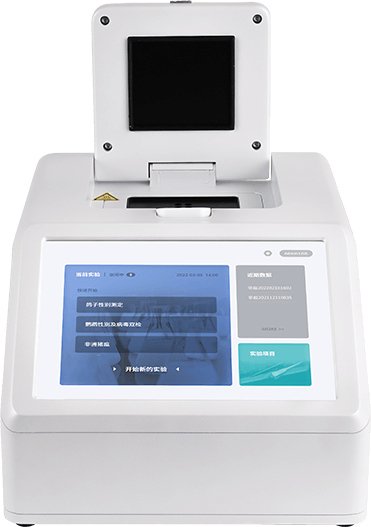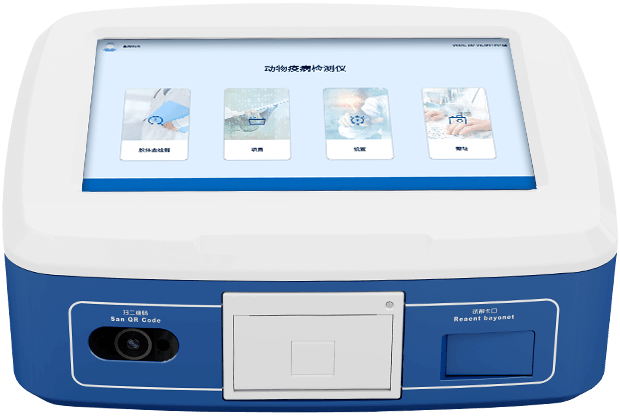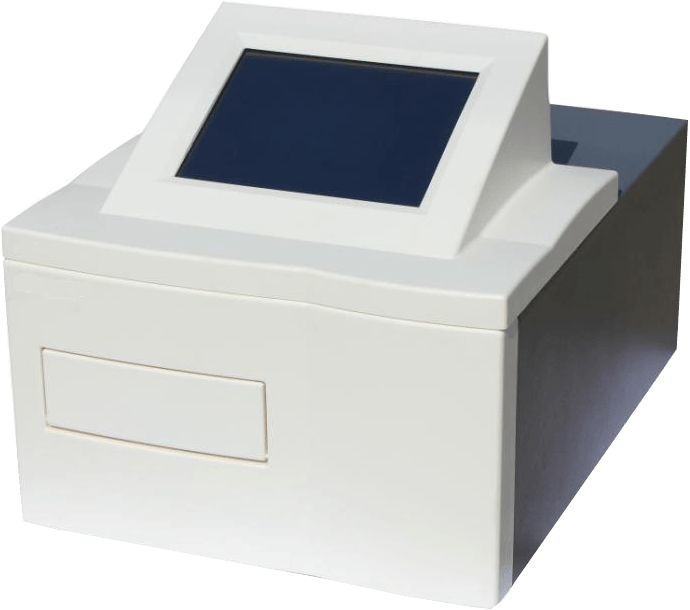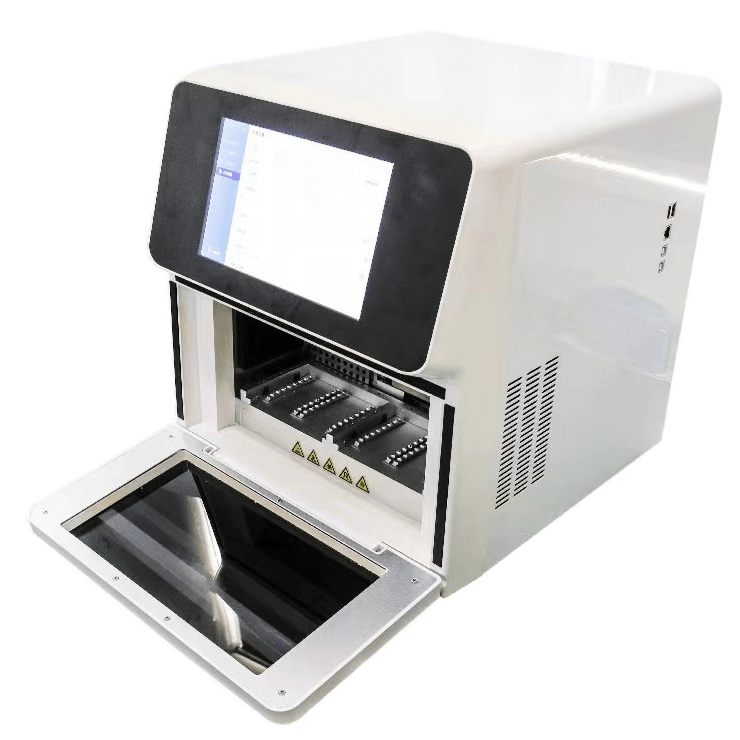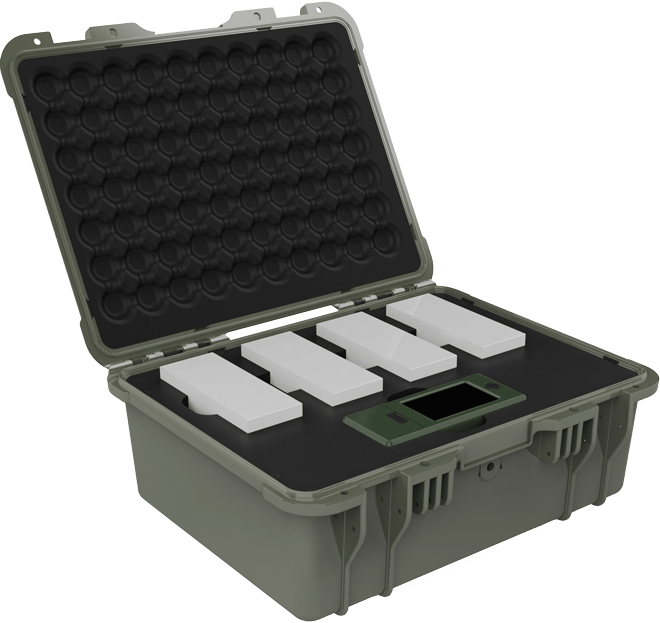
Biological Warfare Agent Detector
- Product Number:LD-SWZJ
- Product Difference:4.3-inch touchscreen, handheld design, Android operating system; used in disease control centers, quality inspection agencies, customs, and other similar settings
 +86 19353291814
 Online Consultation
Product Introduction
The biological warfare agent detector employs a detection technology that combines the principles of immunochromatography and photoelectric conversion, utilizing reflective photoelectric detection to perform calculations based on the intensity of the reflected light current. Its spectral characteristics cover the visible light spectrum, and its voltammetric characteristics are linear; when paired with a lens-type condenser, the system’s sensitivity can be increased by 2 to 3 times. By transmitting energy and converting optical signals, it enables rapid analysis of the sample. Rapid biological warfare agent detectors are widely used in disease control centers, quality inspection agencies, customs, and other similar institutions.
Product Features
Handheld, battery-powered design—compact and lightweight—ideal for mobile testing needs.
Runs on Android 4.4 with a user-friendly interface; operation is simple and smooth, requiring no external devices.
8GB of ultra-high-capacity storage supports flexible searching, previewing, and deleting results by date, as well as generating a variety of professional reports.
High-precision optical system: Utilizes a specific-wavelength light source and photodetectors to minimize ambient light interference.
Built-in thermal printer allows for on-site printing of standard reports immediately after testing, enhancing work efficiency.
Real-time self-diagnostic function for key components ensures long-term stable operation of the instrument.
Wi-Fi and Bluetooth connectivity enable a comprehensive data monitoring platform, facilitating real-time data upload, remote querying, statistical analysis, and regulatory collaboration.
Channels feature built-in incubation modules to provide a precise temperature environment for specific test strip reactions.
Supports test strips of various brands and types using gold-label technology.
Built-in quality control functions support device calibration and submission for testing.
Testing Methods: Incubation testing, rapid testing (for re-verification of test data).
Testing Curve: Allows verification of test strip results to prevent misinterpretation.
Test Results: Reports detailing test items, results for the substances being tested, testing units, the tested entity, the tester, test time, detection limits, and other information can be displayed on the touchscreen and printed via the instrument’s built-in printer.
Project Management: Supports project expansion.
Interface Settings: Titles and footer information can be modified to flexibly display instrument information.
A4 printing is supported via an external Wi-Fi-enabled printer; electronic seals and electronic signatures are supported.
Supports instrument operation via a host computer.
Supports remote OTA updates.
Product parameters
| Display | 4.3-inch touchscreen, resolution 800×480, internal storage 1+8 GB |
| Operating System | Android 4.4 |
| Detection Method | Reflective photoelectric detection |
| Compatible Card Shell | 70 mm × 20 mm |
| Languages | Chinese/ English |
| Storage Capacity | 100,000+ |
| Accuracy | Error Margin ≤ 5% |
| Stability | SW (Coefficient of Variation) ≤ 5% |
| Repeatability | CV (Coefficient of Variation) ≤ 3% |
| Resolution | 0.001 |
| Detection Channel | Single channel |
| Detection Time | <5 seconds; capable of performing qualitative/ semi-quantitative testing |
| Card Insertion Detection | Testing cannot proceed if the test card is not inserted into the testing channel |
| Data Transmission | Wi-Fi, Bluetooth, Type-C |
| Data Processing | Data can be aggregated and uploaded to regulatory platforms via communication ports |
| Test Channel | Integrated incubation and testing; incubation temperature ranges from room temperature +5°C to 60°C |
| Printer | Thermal printer (thermal paper: 57 × 20 mm) |
| Power Supply | Input: AC 100 V–240 V / 0.3 A, 50 Hz; Output: DC 5 V/2 A |
| Power Consumption | ≤10 W |
| Battery Capacity | 6,000 mAh, with battery level display |
| Operating Environment | Temperature: 15–30°C; Relative humidity ≤75% |
| Dimensions and Weight | 206 mm × 85 mm × 60 mm, 670 g |
 Prev
Prev Next
Next