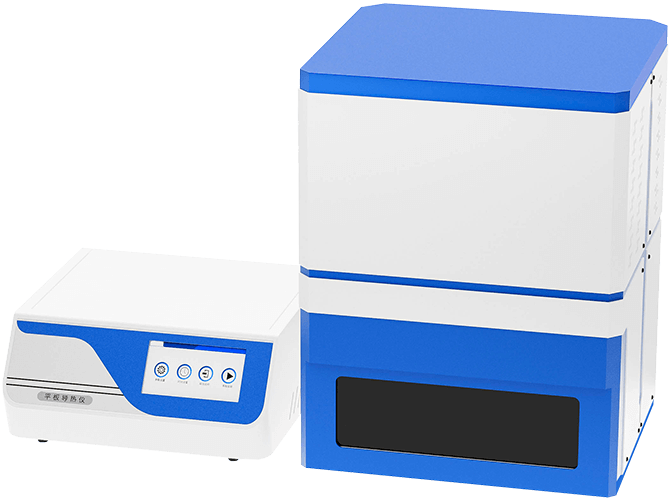
Thermal Conductivity Meter
- Product Number:LD-DR2
- Product Difference:Plate method, thermal conductivity range 0.005–5 [W/(m·K)], measurement time several hours
 +86 19353291814
 Online Consultation
Product Introduction
The DR2 Plate Method Thermal Conductivity Tester operates on the principle of unidirectional steady-state heat transfer. When the upper and lower surfaces of a sample are maintained at different stable temperatures, it measures the heat flux through the sample's effective heat transfer area, along with the temperature difference between the two surfaces and the sample thickness, to calculate the thermal conductivity. Its core functionality lies in determining thermal conductivity by measuring the temperature difference across the sample, the heat flux, and the sample's geometric dimensions.
The Plate Method Thermal Conductivity Tester is a steady-state thermal conductivity instrument designed for building insulation materials, composite materials, multilayer materials, and porous materials, based on the protective plate method measurement principle. It offers high measurement accuracy and excellent temperature control stability, featuring automatic pressure application and measurement, as well as automatic thickness measurement, to accommodate experiments at various temperatures.
Reference standards include ISO 8302:1991 Thermal insulation - Determination of steady-state thermal resistance and related properties - Guarded hot plate method, GB/T 10294-2008 Thermal insulation materials - Determination of steady-state thermal resistance and related properties - Guarded hot plate method, and ASTM C177-19 Standard Test Method for Measuring Steady-State Heat Flux and Thermal Transfer Properties Using a Guarded Hot Plate Apparatus.
Product Features
The fully integrated temperature control system employs an optimized dynamic PID algorithm, significantly mitigating the shortcomings of traditional PID algorithms and enhancing temperature control stability.
The power platform utilizes a heat-spreading structure process, effectively ensuring uniform surface temperature distribution and achieving higher heating efficiency.
The sample chamber features one-touch operation, enabling automatic control of internal mechanical structures via both host and subordinate computers for enhanced convenience.
An integrated high-precision laser distance sensor automatically measures sample thickness, ensuring accurate and efficient testing.
The instrument incorporates a miniature pressure sensor for precise pressure testing of samples, accommodating diverse pressure requirements.
The software supports bidirectional communication, allowing any required experimental parameters to be set directly within the interface. This enables full experimental control through the software, enhancing overall testing intelligence.
The instrument incorporates a highly automated computer data communication and intelligent analysis system. The software records experimental data in real time and automatically analyzes results upon completion.
Product parameters
| Thermal Conductivity Range | 0.0020–2.0000 W/(m·K) |
| Resolution | 0.0001 W/(m·K) |
| Thermal Resistance Range | 0.02–4 (m²·K)/W |
| Hot Plate Temperature Range | RT+10 to 100°C |
| Cold Plate Temperature Range | RT to 80°C |
| Hot Plate Temperature Control Accuracy | ±0.02℃ |
| Temperature Resolution | 0.01℃ |
| Measurement Accuracy | ±3% |
| Repeatability | ±1% |
| Thickness Resolution | 0.01mm |
| Thickness Range | 1~50mm automatic measurement |
| Pressure Application Method | Automatic pressure application |
| Pressure Resolution | ±0.1Kpa |
| Pressure Range | 0~4Kpa automatically adjustable |
| Sample Size | 300mm×300 mm×(5-50 mm) |
| Data Interface | Standard USB interface |
 Prev
Prev Next
Next