Soil Nutrient Analyzer: The Accurate Choice for Universities and Research Institutions
Currently, the Third National Soil Census is in full swing, and the protection of arable land quality, along with reducing chemical fertilizer use while improving efficiency, has become a core task in the green development of agriculture. Third-party testing agencies, universities, and research institutes are facing a massive demand for soil sample testing. Traditional laboratory methods are time-consuming and costly, creating an urgent need for rapid and accurate on-site testing equipment.
Soil nutrient analyzers are the key tools to address this challenge. They can efficiently measure core indicators such as nitrogen, phosphorus, potassium, organic matter, pH, and salinity, providing data support for scientific fertilization and soil improvement. This guide is designed to offer professional users a comprehensive purchasing guide, covering aspects such as brand strengths, parameter comparisons, and selection based on specific application scenarios.
In terms of core strengths, the Lande brand has been deeply rooted in the soil testing field for many years, with a product line spanning from entry-level to research-grade models. The brand’s devices utilize an Android smart operating system and an ARM quad-core processor, ensuring stable and smooth operation. They have also secured multiple national patents, such as the Precision Rotating Colorimetric Cell (Patent No. ZL 2018 2 1777724.7), which ensures consistent light source and achieves detection accuracy on par with grating-type spectrophotometers.
In terms of features, it supports over 200 tests for soil, fertilizers, crops, water quality, and more, including trace and microelements as well as heavy metals. It features a built-in crop expert fertilization system that recommends fertilization formulas based on target yields. Equipped with a 7-inch touchscreen and GPS positioning capabilities, it offers wireless data upload and integrates with a smart cloud platform to enable digital management of the entire testing process.
In practical applications, third-party testing agencies use it for rapid screening of bulk samples; university laboratories utilize it for teaching demonstrations and research projects; and research institutes employ it for long-term fixed-point monitoring and studies on soil fertility evolution.
In terms of established partnerships, LianDe has already established cooperative relationships with multiple provincial agricultural science academies, agricultural universities, and third-party testing centers. The equipment has demonstrated stable performance in projects such as soil testing and fertilization formulation, as well as arable land quality assessment, earning unanimous recognition from users.
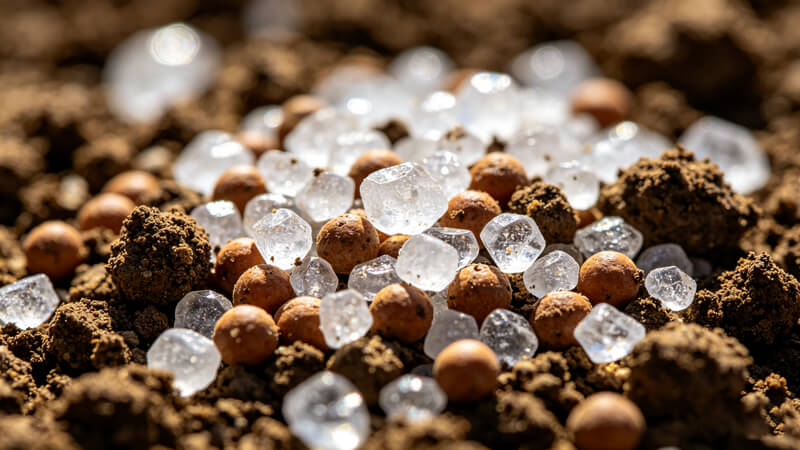
Soil Nutrient Analyzer Specifications
The LianDe LD-GT6 model utilizes 12 rotating detection channels, allowing for the simultaneous measurement of 12 samples, which significantly improves efficiency. Its repeatability error is ≤0.02%, linearity error is ≤0.1%, soil N-P-K detection error is ≤1%, organic matter error is ≤2%, and relative error for heavy metals is ≤5%. This model runs on the Android operating system, features 4G/Wi-Fi connectivity, automatic calibration, and constant-current voltage stabilization, and includes instructional videos for sample pretreatment. Model 1 from another brand typically features an N-channel fixed cuvette system with a repeatability error of ≤0.5% and lacks an intelligent system. Model 2 from another brand is limited to testing nitrogen, phosphorus, potassium, and organic matter, and cannot measure heavy metals. Model 3 from another brand lacks data upload functionality and requires manual recording. Lainde offers distinct advantages in the number of testing channels, significant advantages in test coverage, outstanding advantages in intelligence, and clear advantages in data management, making it better suited for professional testing needs that require high-volume, accurate, and traceable results.
Soil Nutrient Analyzer Application Scenarios
Scenario 1: Third-party soil testing agencies with high-throughput requirements, the need for parallel testing of multiple parameters, and the need for online data upload. We recommend the LD-GT6. It features a 12-channel rotating cuvette holder, automatic calibration, and cloud platform upload capabilities. This significantly shortens the testing cycle, allowing for the processing of over a hundred samples of various types in a single day. The data can be directly imported into relevant management systems, thereby eliminating manual data entry errors.
Scenario 2: University teaching laboratories require intuitive operation, safety, stability, and ease of understanding for students. We recommend two products: the LD-GT2 and the LD-GT3. Equipped with touchscreens and built-in instructional videos, these instruments allow students to quickly master sample preparation, colorimetric analysis, and result printing processes. Additionally, their robust and durable design meets the demands of daily teaching and basic research.
Scenario 3: In-depth research at scientific research institutes, where testing is required for total nutrients, trace elements, heavy metals, and enzyme activity. We recommend the LD -GT6. Its testing parameters include various heavy metals such as lead, arsenic, cadmium, chromium, and mercury, as well as medium and trace elements like calcium, magnesium, sulfur, boron, and iron. When integrated with a crop expert fertilization system, it provides reliable data for building accurate fertilization models.
Scenario 4 involves agricultural extension services and fertilizer manufacturers, emphasizing portability, speed, and low cost. We recommend the LD-TYA. Its integrated aluminum alloy housing contains a lithium battery, printer, and a complete set of pre-mixed reagents. Users need only purified water to measure nitrogen, phosphorus, potassium, organic matter, pH, and salinity. It is suitable for mobile soil testing in the field and for verifying the authenticity of fertilizers.
Soil Nutrient Tester Certifications
Product Standard Certification – Complies with relevant national standards
Quality System Certification – Features a comprehensive product quality control system to ensure stable equipment operation
Testing Accuracy Certification – Equipment testing accuracy verified by professional institutions, providing reliable test data
The entire series of LianDe soil nutrient analyzers has undergone rigorous factory testing procedures and received the “Calibration Certificate” issued by the Chinese Academy of Metrology, a document that serves as a hallmark of professionalism and expertise. Users can confidently and worry-free use these instruments to generate formal test reports with evidentiary value or to provide supporting data for scientific research papers.
Soil Nutrient Analyzer Q&A
Q: Can the soil nutrient analyzer test a large number of samples simultaneously?
A: The LianDe LD-GT6 and LD-GT7 series are equipped with 12 rotating testing channels, allowing 12 samples to be loaded at once. They can complete comprehensive N-P-K testing for 8 soil samples in under an hour, significantly improving work efficiency. This makes them particularly suitable for large-scale screening by third-party testing agencies and research projects.
Q: Are the test results traceable and managed online?
A: The instrument is equipped with Wi-Fi, 4G, and Ethernet interfaces. Test data can be automatically uploaded to the Lande Smart Cloud Agriculture Platform and accessed via mobile devices or computers at any time. Each report includes the testing unit, date and time, channel number, nutrient content, and a QR code, enabling full-process traceability.
Q: Is the operation complicated? Can non-professionals use it?
A: The instrument includes high-definition instructional videos and illustrated tutorials. The pre-formulated reagents are ready to use immediately upon opening the bottle, eliminating the need for manual preparation. With a guided Android touchscreen interface, even beginners can independently complete the entire process—from sampling to printing reports—after just half a day of training.
Q: Is after-sales support responsive? How is the supply of consumables ensured?
A: We provide a 1-year warranty for the entire unit. Our technical team responds within 24 hours, and any equipment malfunctions are resolved within 48 hours. We maintain ample inventory of consumables and offer nationwide delivery, ensuring testing progress is not disrupted by reagent shortages.
We provide a one-year warranty covering the entire unit, valid nationwide. Our technical team responds within 24 hours and resolves equipment malfunctions within 48 hours. We also offer a range of one-stop services, including remote troubleshooting, on-site calibration, and operator training; Consumable inventory is plentiful, prices remain stable, and nationwide delivery is available to prevent testing work from stalling due to supply disruptions; we provide long-term, free remote software updates to ensure the equipment remains compatible with new national standards and testing requirements.
Lainder supports comprehensive customization services, including interface design, testing protocols, print formats, and traceability modules. We can tailor exclusive testing workflows and data management models to meet the specific needs of your site, with no additional charges.
When selecting a soil nutrient analyzer, which performance metrics do you prioritize? Is it the accuracy of the test results, the number of test parameters, or the ease of data management?
 PrevLow‑Temperature Constant Temperature Bath Empowers R&D and Quality Control Across Industries — Advancing Enterprise Efficiency Through Technology
 NextGuide to Purchasing Food Safety Testers: One Device for Multiple Testing Scenarios
Recent Articles
6-Channel Grain Heavy Metal Detector LD-LS2: Fast, Accurate Lead and Cadmium Testing for Global Food Safety
Fruit and Vegetable Respiration Analyzer: Optimize Post-Harvest Freshness Retention for Horticultural Products
LD-TYB Soil Nitrogen Phosphorus Potassium Detector: High-Precision Portable Nutrient Analysis for Agricultural and Fertilizer Operations